
At a time when millions are at risk of going hungry and losing their medical insurance benefits, struggling Americans can at least take solace in knowing that the nation’s college football coaches are doing just fine – especially Brian Kelly.
On Sunday LSU relieved Kelly of his coaching duties after his Tigers suffered a resounding home loss to Texas A&M that dropped them out of the AP’s ranking of college football’s top 25 teams. (This is after LSU was ranked as high as third in September and firmly in the top 10 for most of the season.) Kelly, who was in the fourth year of a decade-long contract worth about $100m, will be going home with more than just a box full of purple and gold office trinkets.
While the terms of Kelly’s departure have yet to be resolved, his contract puts the school on the hook for 90% of his deal balance if he’s fired for cause – a final tab that comes to around $54m. The contract does include a “duty to mitigate clause” that asks him to pursue another job so that LSU won’t owe him quite so much money. But another program would have to be fairly desperate to hire him, considering he went 31-14 with one college football playoff appearance at LSU, a school less than six years removed from winning a national title. The more likely scenario is that LSU will continue making $800,000 monthly payments to Kelly through 2031 while the coach, who turned 64 on Saturday, rides comfortably into retirement. It’s nice work if you can get it, especially in this economy.
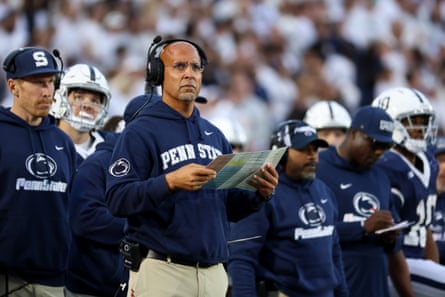
But ultimately it’s Kelly who makes the more convenient villain among media and fans for a college coaching buyout craze run amok. Although respected for his strategic mind and knack for turning around wayward programs, Kelly breaks from the avuncular college coach stereotype. He doesn’t simply lack Orgeron’s rascal energy or the folksy charm of Les Miles, to name another LSU predecessor; he appears to be a repellant personality. San Francisco 49ers defensive coordinator Robert Saleh remembers starting out on Kelly’s Central Michigan coaching staff alongside Matt LaFleur, now the Green Bay Packers head coach, in the early-2000s. Kelly invited them to a social event at his house –but only so they could park cars and shovel snow, in a scene ripped from Coming to America. “We decided that when we’re in that position, we’re never going to treat people the way we got treated,” Saleh told ESPN.
After LSU hired him in December 2021, Kelly, a proper Irish-Catholic Bay Stater, introduced himself to a stunned Tigers basketball crowd in a horrific southern accent that was widely mocked online. At Notre Dame, which was rehabilitated under Kelly in the 2010s, he complained about the school’s lofty academic standards undercutting his ability to build rosters. At LSU, he moaned about having to pay players under the current NIL system while committing more than $10m a year to assistant coaches he also couldn’t gel with – contracts that the school will also have to buy out. One of Kelly’s more egregious errors was firing Tommy Moffitt, the beloved strength coach behind LSU’s last three national titles, and setting him up for sweet revenge at Texas A&M – who Moffitt has helped mold into the country’s third-best team, as Kelly saw for himself last Saturday. In the end it was Louisiana governor Jeff Landry – who makes around one-10th of Kelly’s state salary – calling for the coach’s job that forced the LSU board’s hand. Not long after getting pink-slipped, Kelly was spotted dining alone at a Mexican chain restaurant – as if finally getting around to celebrating that birthday of his, but with no actual friends to show up for him.
On Monday, Washington state congressman Michael Baumgartner, a Republican, introduced a bill titled Correcting Opportunity and Accountability in Collegiate Hiring (or COACH) that would amend the Higher Education Act of 1965 to cap the total annual compensation of any athletics department employee at no more than 10 times the institution’s annual in-state costs for a full-time undergraduate student – about $280,000 in LSU’s case. “There is no greater societal benefit to have a coach make $10m versus $200,000,” Baumgartner told Sportico. But the odds of his proposal making it out of committee, as Sportico’s Daniel Libit rightly observed, “is slimmer than the chance of every FBS coach keeping their job for the rest of the season”.
College football teams like to think of themselves as the “front porch” to their academic institutions. But lately it’s looking more like the White House’s proposed East Wing ballroom: a monstrous addition that threatens to overshadow everything else. With the average American already struggling to make ends meet, much less stump up for college football tickets, the idea of paying a coach millions of dollars to sit at home is as jarring as expecting LSU to run the table with interim coach Frank Wilson. The colleges and power conferences could curb some of the post-employment spending themselves by setting buyout cap conditions and making coaching contracts shorter with more performance-based terms. But it’s unlikely that much will change, especially in the current political climate, until the money dries up. At this rate the day may not be too far off.
About the Author