
It’s a wet Wednesday afternoon and Wales are holding an open training session at the Principality Stadium. Admission is free, apart from the £1 booking fee, and the 6,000 seats they’ve made available are filled with raucous kids and weary parents looking for something new to do during a rainy half-term day. The announcer keeps reminding everyone that tickets are still available for all four of Wales’ autumn internationals, against Argentina on Sunday, Japan, New Zealand and South Africa. No one in the media seats can quite remember the last time there were spare tickets for a Test match against the All Blacks.
I join a couple of old boys loitering in the back rows. They’re Mervyn and Steve, down from Pontypridd. The previous Friday the Welsh Rugby Union (WRU) had announced its grand plan to revitalise the sport, which included – almost an hour into the press conference – the revelation that it is going to scrap one of the four regional teams. Everyone agrees that the four regions are overstretched and underfunded. A Welsh team has not finished in the top seven of the United Rugby Championship (URC) since before the pandemic. The decision to make a cut was easy enough. The harder part is figuring out who, why and when, and the hardest is persuading everyone to go along with it.
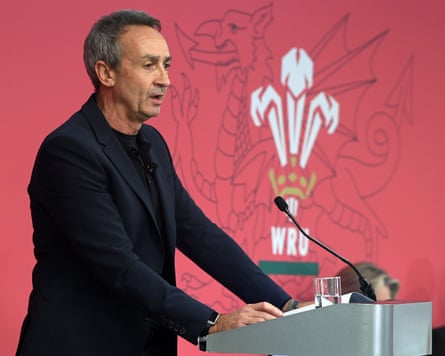
Under the WRU’s plans there is room for only one team in the west, and everyone’s best guess is that either the Scarlets or Ospreys, the only two Welsh teams who have ever actually won the URC, will have to merge, or that one of them will have to make way.
The WRU confused everyone by suggesting it would be possible for one of the four current teams to take over another of the future three, appearing to suggest it may be hoping one of the current private investors will want to take over the Cardiff team, owned by the union. The union wants to take on full control of regional rugby, but it can’t afford to unless it can find partners who are happy to let it do that.
Reddin seems to believe it will all work so long as everyone agrees to get along. “Let’s get together,” he said in a recent interview. “If you want to go fast you go alone, if you want to go far you go together, everyone’s had their say, we’ve made decisions, and what we need people to do now is get behind it.” And Kumbaya to that.
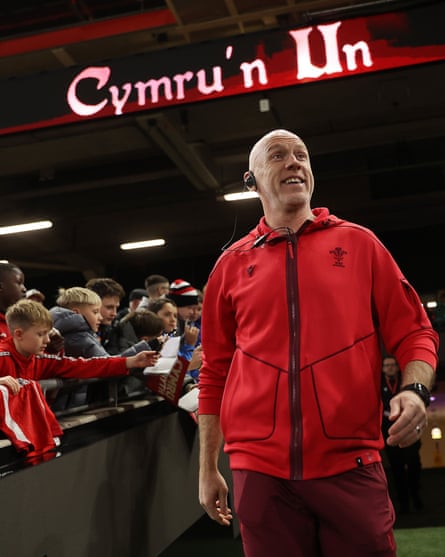
At the Principality Stadium, the Welsh players are done running through drills and are now playing a game of touch rugby. Bodies jink and weave in between the opposition, the ball flickers back and forth between teammates.
No doubt there are still plenty of talented young players in Wales, but a number of them have no idea who will be paying them, or whether they will still have a job in the professional game in a couple of years’ time. The WRU was the only major union that didn’t sign the letter promising to ban players who joined the new breakaway league, R360, perhaps because its plans mean plenty of players are going to have to find new employers.
There are noises off about a possible strike and everyone is dreading the match against the Springboks, in particular, since it falls outside the international window and Wales will have to do without all their players who are based in England. The regional teams are playing that weekend, too.
Out in the middle, the new head coach, Steve Tandy, pulls his squad into a huddle. No one seems to have a bad word to say about him and he has put together an impressive coaching team, led by Danny Wilson from Harlequins and Matt Sherratt from Cardiff, as well as Rhys Patchell, Duncan Jones and Dan Lydiate. He has changed up their training regime and switched around the dressing rooms they use, small changes which he hopes will all add up to a bigger one during their four autumn games. “It feels completely different to last year,” says Freddie Thomas. “It was quite a quiet group last year, but now all the boys are speaking up in meetings, there’s a real buy-in.” Some hope. And some hope.
About the Author