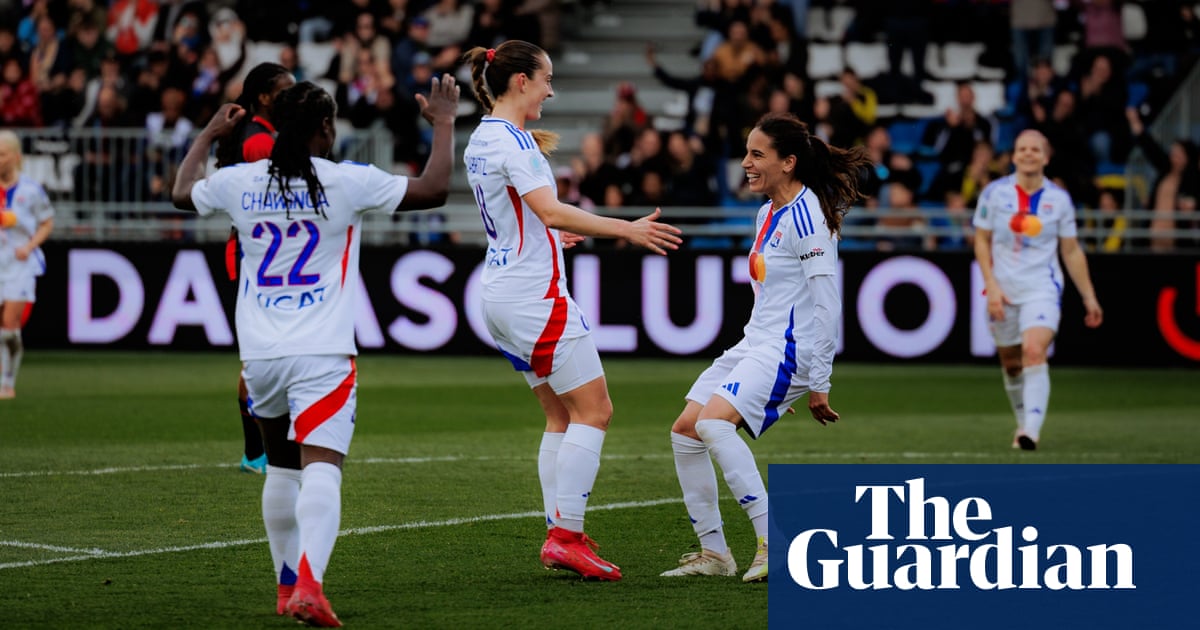
A big change occurred in France last summer when the top two divisions of the women’s game were professionalised under the banner of the new Ligue Féminine de Football Professionnel (LFFP), led by the former Lyon president Jean-Michel Aulas.
With the aim of making a league dominated for almost two decades by Aulas’s former club and Paris Saint-Germain more interesting, the changes included a rebranding of the top two divisions, an overall budget increase for the league stretching into eight figures, plus mandatory criteria such as every top division side having a minimum 11 full-time players, with second division sides having at least 11 contracted part-time players. Clubs can now have a fourth non-EU player, while those involved in the new structure have taken lessons from other leagues such as rest days for teams in the Champions League and canvassing supporters for the best kick-off times.
The aim has been to improve standards and create a more competitive league, but with two games to go it is once again Lyon and PSG running away with things. Plus ça change, as they say.
But beneath the surface, the changes are being welcomed, even by those who, in the long run, may be left behind as bigger names fight for promotion to the top division. Among them are fourth-placed Dijon, almost certain to clinch their first spot in the end of season playoffs, and Fleury, sat just behind in fifth, who last season knocked Lyon out of the domestic cup on the way to a historic final.
With their men’s teams sat in the third and fourth tiers respectively, both are massively punching above their weight – sitting above sides such as Montpellier, Nantes and Saint-Étienne – but have welcomed the increased professionalisation.
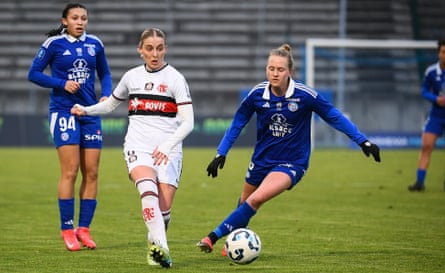
“There has already been really good communication with the LFFP, because we had no communication with the FFF [French Football Federation],” says Sylvain Carric, who runs the women’s football side of Dijon. “We have support on marketing structures, as well as contracts negotiated with Catapult and MyCoach, for example, for performance and medical matters to offer more support to the players.”
Carric believes the biggest challenge is to make the game financially independent, but with Dijon already fully professional the change has been more difficult for Fleury, especially after they lost their head coach, Fabrice Abriel, to PSG last summer along with some key players.
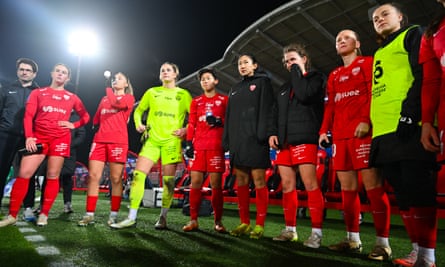
Does that create a greater fear of bigger clubs on the rise, with Nantes promoted last season and already established in seventh in the top division, with others such as Marseille and Lens possibly on the way? “No, on the contrary,” says Bovis. “This will make the championship even more attractive. It’s up to us to stay smart in our recruitment, to maintain the club’s unique spirit and to continue to perform despite our unique status. But isn’t that also the charm of football? And that’s why we love it … ”
Get in touch
If you have any questions or comments about any of our newsletters please email moving.goalposts@theguardian.com.
-
This is an extract from our free weekly email, Moving the Goalposts. To get the full edition, visit this page and follow the instructions. Moving the Goalposts is back in to its twice-weekly format, delivered to your inboxes every Tuesday and Thursday.
About the Author