
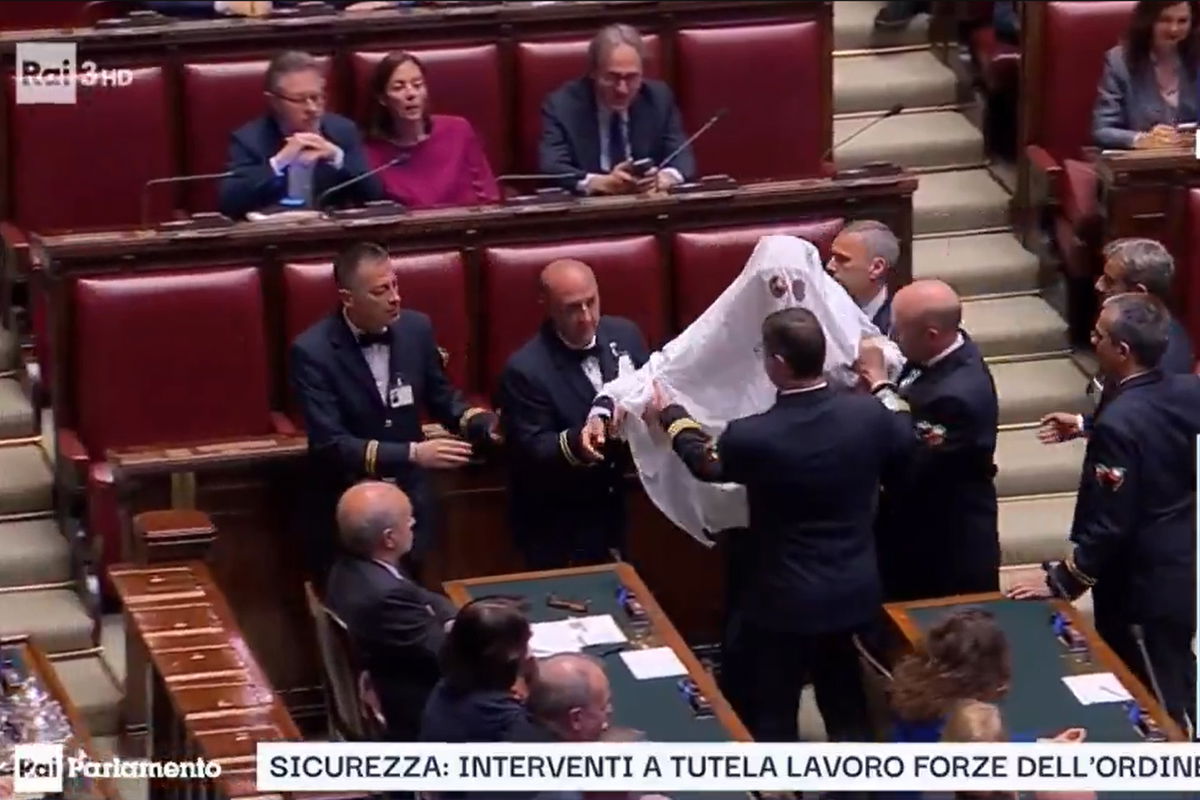
A ghost haunts Italy’s parliament: theatrical protest against government. Credit: Italian Congress TV
Italy’s Chamber of Deputies witnessed an unusual and symbolic protest when a lawmaker entered the chamber draped in a white sheet like a ghost, with the word “Referendum” written across the front.
The stunt was led by Riccardo Magi, secretary of the liberal party +Europa, who used the theatrical gesture to denounce what he sees as an attempt by Giorgia Meloni’s government to suppress public debate and encourage voter abstention ahead of the national referendums scheduled for 8 and 9 June.
Magi’s intervention took place during a question session with the prime minister, while far-right League MP Riccardo Molinari was speaking about security policies. From his seat, Magi interrupted the speech and shouted towards Meloni: “Do you remember?”, before being escorted out of the chamber by parliamentary ushers and security officials, following an order from Chamber President Lorenzo Fontana.
“He did this while we were discussing the security forces. It clearly shows who respects them and who doesn’t,” Molinari said after the incident.
Though theatrical, Magi’s protest was intended to highlight what his party sees as a covert strategy by the government to minimise voter turnout by keeping public attention away from the referendums. The upcoming votes will tackle politically sensitive issues, including the repeal of parts of the 2015 labour reform and changes to the criteria for granting Italian citizenship.
While the government remains silent, the opposition is determined to ensure that Italian citizens are not.
What are Italians about to vote on—and why should we care?
On Sunday 25 and Monday 26 May, millions of voters in regions with ordinary statutes will cast ballots in local elections. They’ll choose new mayors and municipal councils. A potential runoff round is set for Sunday 8 and Monday 9 June.
The referendums: five big questions, one big hurdle
The 8–9 June referendums ask voters to overturn laws on key issues related to labour and citizenship. The catch? They’re only valid if at least 50% plus one of eligible voters turn out—a high bar in an age of political apathy.
This requirement, enshrined in Article 75 of the Italian Constitution, means that even popular proposals can fail if turnout is too low.
Why this matters—beyond Italy
From urban planning to workers’ rights, these votes will set the tone for Italy’s domestic agenda—and possibly influence political debates across Europe. Whether you’re an EU observer, a policy nerd or just curious about the continent’s democratic shifts, this is one election season worth watching.
Stay tuned with Euro weekly news for the latest news about Europe and Italy.
About the Author

![Sunday is the last day to take advantage of the Chase refinance mortgage rate sale [Expired]](https://thenewsblend.com/wp-content/uploads/2025/12/eed000a0-caf6-11f0-baaf-499d9d48b516-768x512.jpg)