
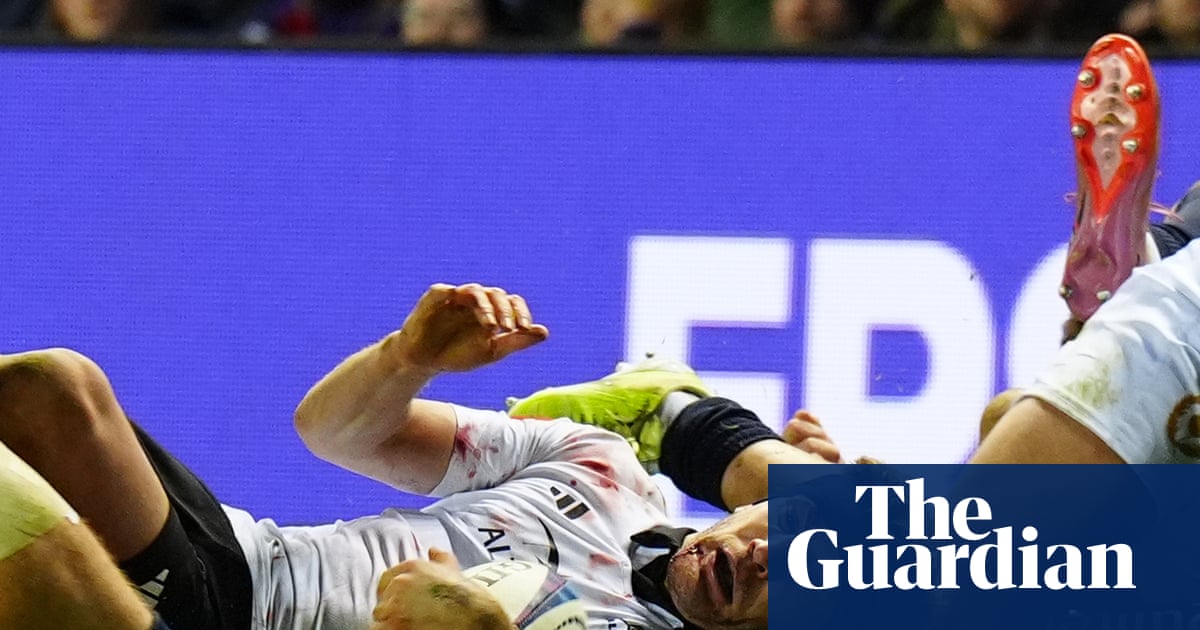
This week’s column is being compiled slightly differently. It’s not easy to type while looking upwards and smiling warmly at the bookshelf but, hey, that’s the price to be paid for method sportswriting. When you’re putting together a piece on Damian McKenzie, the All Blacks’ so-called “smiling assassin”, it’s important to try to get into character.
The head bandage took time to apply as well, as did the fake-blood drizzle of ketchup down the cheek. Anyone who watched the later stages of New Zealand’s win against Scotland on television on Saturday, however, will appreciate why the extra touches felt appropriate. It is not every day a player preparing to kick the clinching points in a major Test resembles a happy, beaten prizefighter.
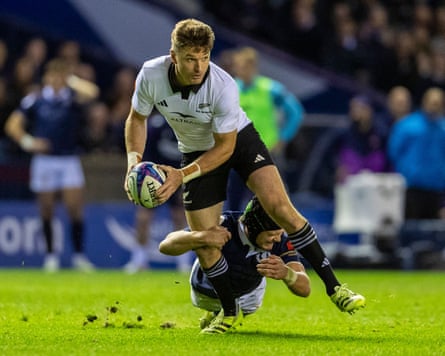
Ditto McKenzie, who turns 31 in April and has also signed a deal committing him to New Zealand rugby until 2029. So far he has won 72 Test caps and scored 353 points, 248 of them via kicks at goal. Latterly these have developed into absorbing mini‑dramas in their own right. The shy preparatory smile – find someone who gazes at you the way DMac looks at those distant posts – has long been an attempt to enjoy the moment and to try to reduce the pressure around goalkicking. In the majority of cases, give or take days when he has a disconcerting river of blood running down his face, it works.
Sure, it remains debatable whether there is room for Barrett or McKenzie in the greatest collated All Blacks matchday squad of the professional era, with Dan Carter and Christian Cullen still in pole position to claim the 10 and 15 shirts respectively. But what the current duo have always stood for is something beyond national boundaries: the idea that skill and vision can still win you top-level games if sufficiently trusted to flourish.
Maybe it is just something in the Kiwi milk. McKenzie is from dairy farming stock in Southland at the bottom of New Zealand’s South Island while the Barretts were also raised on a dairy farm just south of New Plymouth. More relevant, perhaps, is that all that wide open space – combined with sporty elder siblings – gives kids the scope to let their imaginations roam, whether or not they are running with a rugby ball.
after newsletter promotion
Either way, as McKenzie darts here and there for New Zealand and the Chiefs, there is always the chance of something special or off-script happening. Which invites the question of whether the same characteristics would have developed had he grown up on a far-flung British dairy farm instead. Modern-day English rugby, for the most part, tends to focus more on physical size and data than instinctive genius, assuming Premier League football hasn’t creamed off the best young athletes already.
That said, the All Blacks are anything but dewy‑eyed romantics when it comes to winning Test matches and their core priority will definitely apply in London this Saturday. For all the individual abilities of Barrett and McKenzie, visiting sides know to expect an aerial assault when they face Steve Borthwick’s England, whether it comes in the shape of the high‑flying Tommy Freeman and Tom Roebuck or the bucket‑like hands of Freddie Steward.
It means the All Blacks may have to rethink their backline formation slightly for this weekend – or find alternative ways to play the game more on their preferred terms. Whether or not New Zealand’s super sub starts, though, viewers will be able to gauge the state of play by the number of times they glimpse McKenzie’s winning smile.
-
This is an extract taken from our weekly rugby union email, the Breakdown. To sign up, just visit this page and follow the instructions.
About the Author


![Sunday is the last day to take advantage of the Chase refinance mortgage rate sale [Expired]](https://thenewsblend.com/wp-content/uploads/2025/12/eed000a0-caf6-11f0-baaf-499d9d48b516-768x512.jpg)